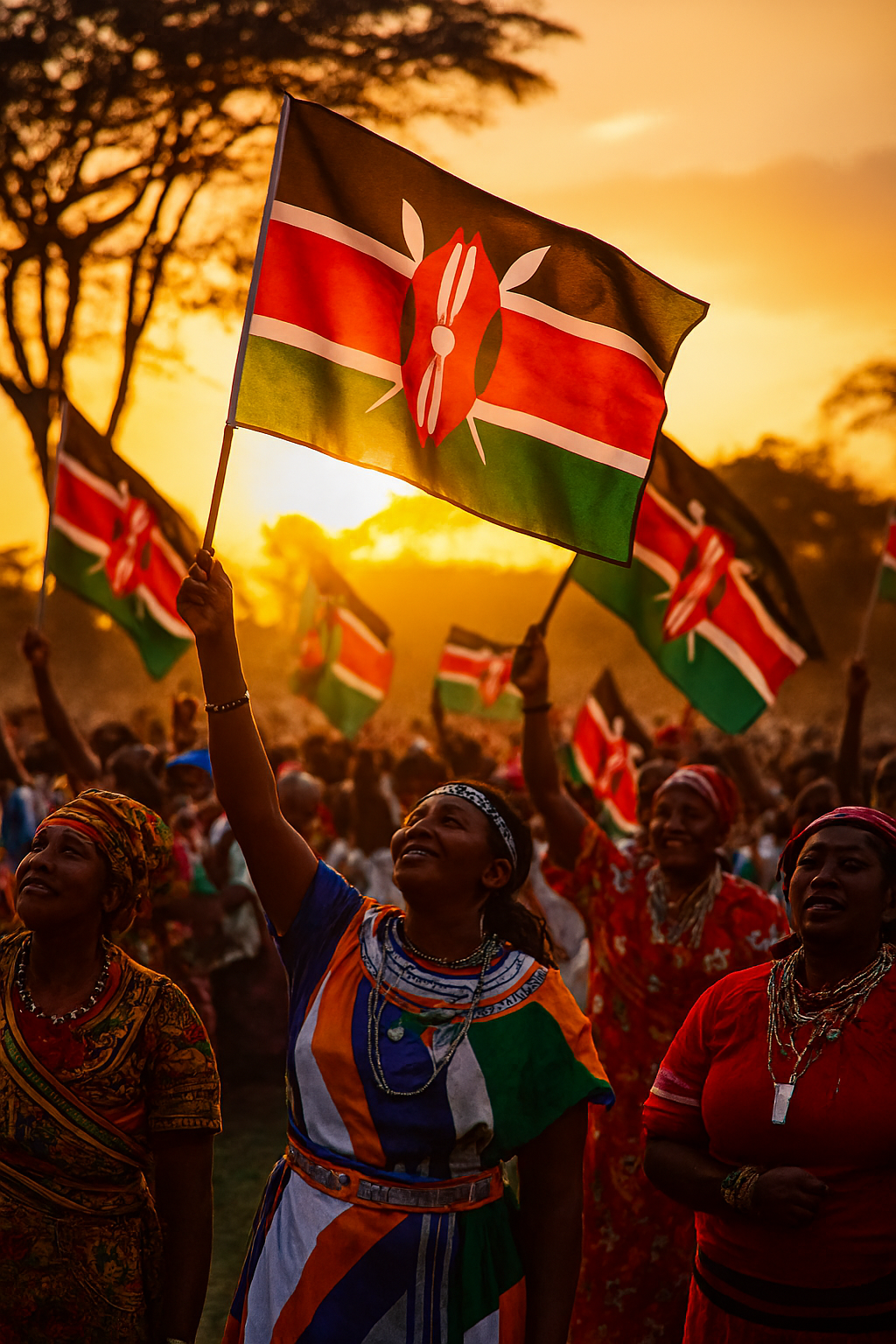
🇰🇪 Jamhuri Day 2025: A National Story of Freedom and Unity
On the morning of December 12, 2025, the air across Kenya was filled with anticipation. From the bustling streets of Nairobi to the quiet villages in Turkana, citizens prepared to mark Jamhuri Day, the country’s most significant national holiday. It is more than just a date on the calendar; it is the living memory of Kenya’s journey from colonial rule to independence, and from independence to a sovereign republic.
The story begins in 1963, when Kenya finally broke free from British colonial rule after decades of struggle. The Mau Mau uprising, the sacrifices of freedom fighters, and the relentless push for self-determination culminated in the declaration of independence on December 12, 1963. Just one year later, on the same date, Kenya became a republic, with Jomo Kenyatta sworn in as the first President. That dual milestone is why Jamhuri Day carries such weight: it is both the day of independence and the day of full sovereignty.
In 2025, the official celebrations unfolded at Nyayo Stadium in Nairobi, where President William Ruto presided over the national ceremony. The Kenya Defence Forces marched in precision, their uniforms gleaming under the sun, while the national anthem echoed across the stadium. Foreign dignitaries, including Ghana’s President John Mahama, joined the occasion, underscoring Kenya’s diplomatic ties and its role as a leader in Africa.
But Jamhuri Day is not confined to the capital. Across the 47 counties, governors and local leaders hosted parades, cultural dances, and community feasts. In schools, children recited poems about independence heroes, sang patriotic songs, and staged plays that reminded everyone of the sacrifices made for freedom. In villages, elders told stories of the struggle, while youth groups organized football matches, concerts, and charity drives.
The celebrations were not only physical but also digital. On social media, hashtags like #JamhuriDay2025 trended, with Kenyans posting photos of themselves in flag-colored outfits, sharing reflections on patriotism, and debating the meaning of independence in today’s world. Television and radio stations broadcasted the ceremonies live, ensuring that even those far from Nairobi could feel part of the national moment.
The meaning of Jamhuri Day runs deep. Socially, it is a day of unity, reminding Kenyans that despite ethnic, cultural, and political differences, they share a common destiny. Culturally, it is a showcase of diversity, with Maasai dances, Kikuyu songs, Swahili poetry, and modern Gen Z music blending into one vibrant tapestry. Patriotically, it is a reaffirmation of love for the flag, the anthem, and the heroes who fought for freedom. Civically, it is a reminder of responsibility — that independence is not just about rights, but also about duties to the nation.
Different voices interpret Jamhuri Day in different tones. The official voice speaks with solemnity, declaring that “on this 62nd Jamhuri Day, the Republic of Kenya reaffirms its commitment to unity, democracy, and prosperity.” The analytical voice reminds citizens that the day is not only ceremonial but also a civic checkpoint, urging policymakers to reflect on inclusivity, youth empowerment, and sustainable development. The humorous voice brings it down to earth: “Jamhuri Day is that one day when Kenyans suddenly remember the lyrics to the national anthem, and even the neighbor who never pays rent waves a flag proudly — because patriotism is free!”
The political voice is more critical, pointing out that independence is incomplete without tackling corruption, inequality, and unemployment. The diplomatic voice frames Jamhuri Day as a celebration of resilience, a story that resonates beyond Kenya’s borders. The patriotic voice stirs emotions, declaring that “every heartbeat on Jamhuri Day echoes the rhythm of our anthem, and every flag raised is a promise to future generations.” Finally, the community voice makes it warm and relatable: “Jamhuri Day is like Kenya’s big family reunion, where we laugh, dance, eat chapati, and remember we’re all part of one big Kenyan story.”
As the sun set over Nairobi, casting golden light on Uhuru Gardens, the day’s significance lingered. Jamhuri Day is worthy of celebration because it marks freedom from colonialism, the birth of national identity, and the hope of progress. It is a reminder that Kenya’s journey is ongoing — that independence was the beginning, not the end.
For citizens, the practical ways to honor Jamhuri Day are simple yet powerful: wear the flag colors, teach children about independence heroes, attend local celebrations, or simply reflect on how each person contributes to Kenya’s progress.
In the end, Jamhuri Day 2025 was not just about parades or speeches. It was about memory, meaning, and movement — a day when Kenya looked back with pride, celebrated the present with joy, and looked forward with hope.
- Wikipedia – Jamhuri Day
- The Star Kenya – Understanding Jamhuri Day
- Capital FM – President Ruto leads Jamhuri Day 2025
- Public Sector Magazine – Why Kenya Celebrates Jamhuri Day