
By Cotech Media Network (CMN)
Date: October 15, 2025 | Location: Kitale, Kenya
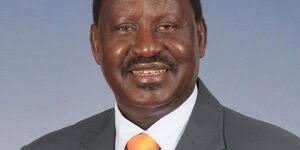
Kenya is in mourning following the death of former Prime Minister and longtime opposition leader Raila Amolo Odinga, who passed away at the age of 80 while receiving treatment in Kochi, India. Odinga — affectionately known to millions as “Baba” — was one of the most enduring and influential figures in Kenya’s political history, remembered for his fiery spirit, resilience, and unyielding fight for democracy.
A Lifelong Political Journey
Born on January 7, 1945, in Maseno, Kisumu County, Raila Odinga was the son of Jaramogi Oginga Odinga, Kenya’s first Vice President and a founding father of the nation. From his earliest days, politics ran through his veins. Educated in East Germany, Raila trained as an engineer before returning home to work at the Kenya Bureau of Standards — but his destiny was in public service and political struggle.
In the 1980s, Raila was detained without trial for his involvement in pro-democracy movements that opposed the one-party rule of President Daniel arap Moi. His imprisonment, exile, and repeated persecution transformed him into a symbol of resistance and hope for many Kenyans yearning for political freedom.
Champion of Multiparty Democracy
Raila Odinga was among the key voices that fought for the reintroduction of multiparty democracy in the early 1990s. He won his first parliamentary seat as MP for Langata in 1993 and became a central player in the fight to dismantle authoritarianism.
Over time, he served in several ministerial positions, including Minister for Energy and later Minister for Roads, Public Works and Housing, where he was known for his pragmatic leadership and populist approach.
The 2007 Election and the Power-Sharing Era
Raila’s most dramatic political moment came in 2007, when he contested the presidency against Mwai Kibaki. The disputed results triggered widespread post-election violence that left more than 1,000 people dead and hundreds of thousands displaced.
Following mediation led by the late Kofi Annan, Raila agreed to a power-sharing deal, assuming office as Kenya’s second Prime Minister in April 2008 under the Grand Coalition Government. This uneasy partnership helped stabilize the country and paved the way for the 2010 Constitution, a landmark reform he championed throughout his career.
Five Presidential Bids, One Enduring Vision
Raila Odinga contested the presidency five times — in 1997, 2007, 2013, 2017, and 2022 — often claiming electoral malpractice and fighting for justice through courts and public protest. Despite never ascending to the presidency, his persistence earned him admiration across generations as a symbol of democratic resilience.
As leader of the Orange Democratic Movement (ODM), Raila built one of the most powerful political movements in the country, uniting diverse ethnic and social groups around the dream of reform, equality, and accountability.
Regional and International Role
In recent years, Raila extended his influence beyond Kenya’s borders. He was appointed as African Union High Representative for Infrastructure Development and often served as a mediator in regional peace efforts. In early 2025, President William Ruto dispatched him on a diplomatic mission to South Sudan to help avert political conflict — a testament to his stature as a respected statesman even among political rivals.
Controversy and Conviction
Raila’s career was not without controversy. His political style, characterized by mass mobilization and fiery rhetoric, often polarized the nation. Critics accused him of fueling division, while supporters hailed him as a fearless voice of the people and the conscience of the Republic.
Through decades of struggle, detention, and electoral heartbreak, Raila remained steadfast in his conviction that Kenya deserved better governance and a fairer society.
Family and Personal Life
Raila was married to Ida Odinga, a respected educationist and advocate for women’s empowerment. Together they raised four children and maintained strong ties to their rural home in Bondo, Siaya County. Away from politics, Raila was known to enjoy football, traditional music, and quiet family gatherings — moments that revealed the softer side of a man constantly in the national spotlight.
Nation in Mourning
As news of his passing spread, tributes poured in from across Kenya and around the world. Political leaders, civil society, and citizens united in grief and remembrance.
President William Ruto and other leaders are expected to issue formal statements, with the government likely to announce national mourning plans in recognition of Odinga’s contribution to Kenya’s democracy.
Flags were lowered to half-mast in several counties, while ODM supporters held vigils across major towns — many describing him as “a father of the struggle” and “the voice that refused to be silenced.”
A Lasting Legacy
Raila Odinga’s death closes one of the most consequential chapters in Kenya’s post-independence history. His courage, reformist zeal, and unmatched political stamina helped shape the country’s democratic landscape.
Though he never held the presidency, his ideas and influence transformed Kenya’s political debate — ensuring that questions of justice, equality, and inclusion remain at the heart of the nation’s story.
As Kenya reflects on his life, one truth stands clear:
Raila Amolo Odinga may be gone, but his voice and vision will echo through generations.